Neonatal care leave gives you up to 12 extra weeks off, taken after maternity leave, if your baby spends at least 7 full, continuous days in neonatal care. Statutory Neonatal Care Pay is £194.32 a week, or 90% of your average weekly earnings if lower, but it has its own eligibility test. The Neonatal Care Leave and Pay Calculator works out your weeks and pay.
It covers babies born on or after 6 April 2025 in England, Scotland and Wales.
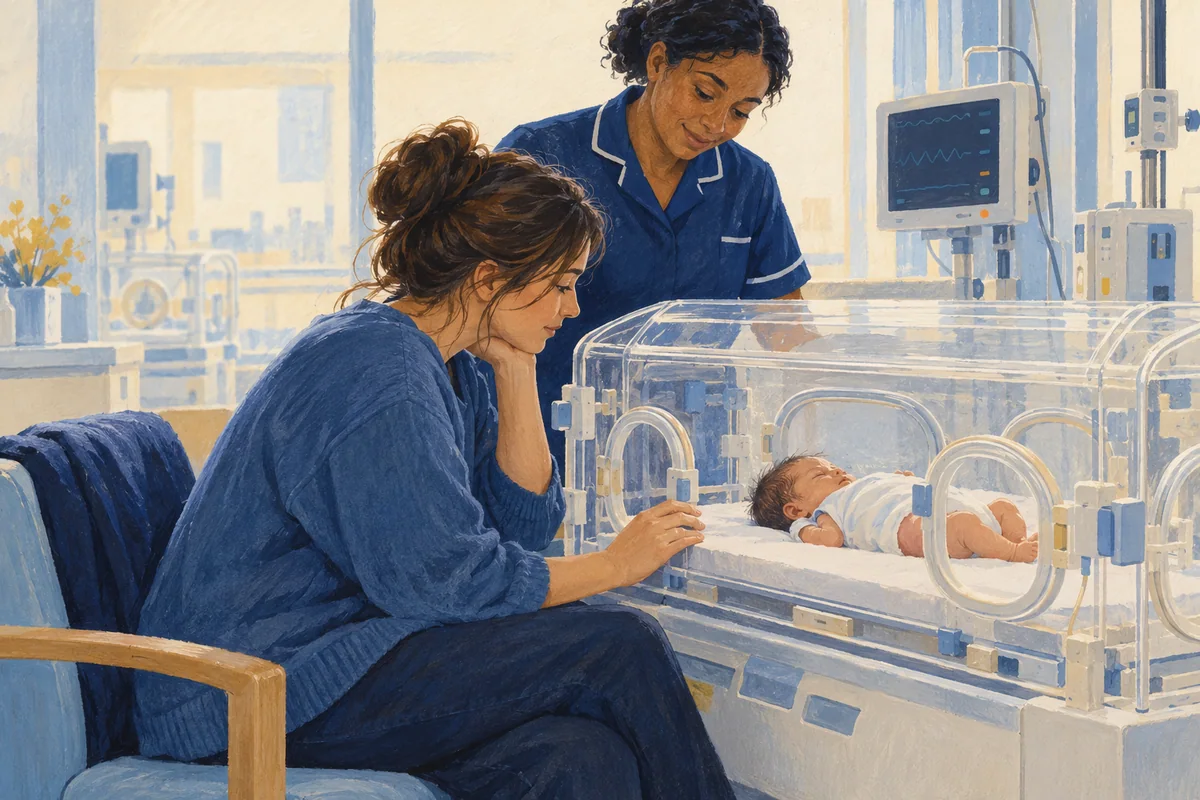
How many weeks of neonatal care leave can you get?
You get 1 week of leave for every 7 full, continuous days of neonatal care, up to 12 weeks. Care must start within 28 days of the birth. It can be hospital care, consultant-led follow-up care or palliative care.
Only full weeks count. Six weeks and four days of care gives 6 weeks of leave, so confirm the care dates with your employer.
When do you take it after maternity leave?
If the care happened during your maternity or adoption leave, you take neonatal care leave after that leave ends. All of it must be taken within 68 weeks of the birth. It does not replace the unpaid weeks inside maternity leave.
| Example sequence | Leave or pay status |
|---|---|
| Maternity leave weeks 1 to 39 | SMP if eligible; employer top-ups depend on the policy |
| Maternity leave weeks 40 to 52 | Normally outside the SMP period |
| Six qualifying neonatal weeks after a full 52-week maternity leave | Neonatal leave in weeks 53 to 58; separate pay eligibility applies |
The example assumes 6 weeks of leave built up and the full 52 weeks of maternity leave taken. Ending maternity leave early moves these dates, so ask payroll to confirm both before you change an agreed date.
Who qualifies for neonatal care leave and pay?
Leave is a day-one right for employees, so you need no minimum length of service. Pay needs more: 26 weeks of continuous employment by the qualifying week, average earnings of at least £129 a week, and still being employed in the week before pay starts.
The qualifying week is normally the one used for your maternity, paternity or adoption pay. If none of those applies, it is the week before neonatal care starts.
Northern Ireland has separate rules. The Northern Ireland maternity pay guide links to the local guidance.
How much is Statutory Neonatal Care Pay?
For 2026 to 2027 it is £194.32 a week, or 90% of your average weekly earnings if that is lower. Tax and National Insurance come off through payroll.
Four weeks at the standard rate is £777.28 before tax. The rate usually changes each April, and your employer may pay more under its own policy.
How much notice do you give your employer?
For leave during the care or in the week after it ends, you can tell your employer informally, before you are due to start work that day. For later leave, give 15 days' written notice for 1 week, or 28 days for 2 or more weeks.
Give the birth date, the care dates, the leave dates you want and a declaration about your relationship to the baby and your caring responsibility. You claim the pay from your employer. It is not added to SMP automatically.
Keep your Statutory Maternity Pay schedule, the end of maternity leave and the neonatal leave dates as separate lines in your plan. That shows any unpaid gap before the first neonatal payment.